Three problems new owners notice first
In the first year in a new house, the chimney usually makes itself known in one of three ways. There is a brown stain on the ceiling or wall next to it after rain. The room smells of smoke, or smoke drifts back in when there is a fire. Or the damper handle is stiff, will not stay open, or will not close. Each of these points to a different part of the chimney and a different repair.
This guide is for owners in Arcadia and nearby who have spotted one of these signs. It explains what the parts are, what usually causes the problem, and how Thurston Chimney Sweep prices the fix.
The parts involved
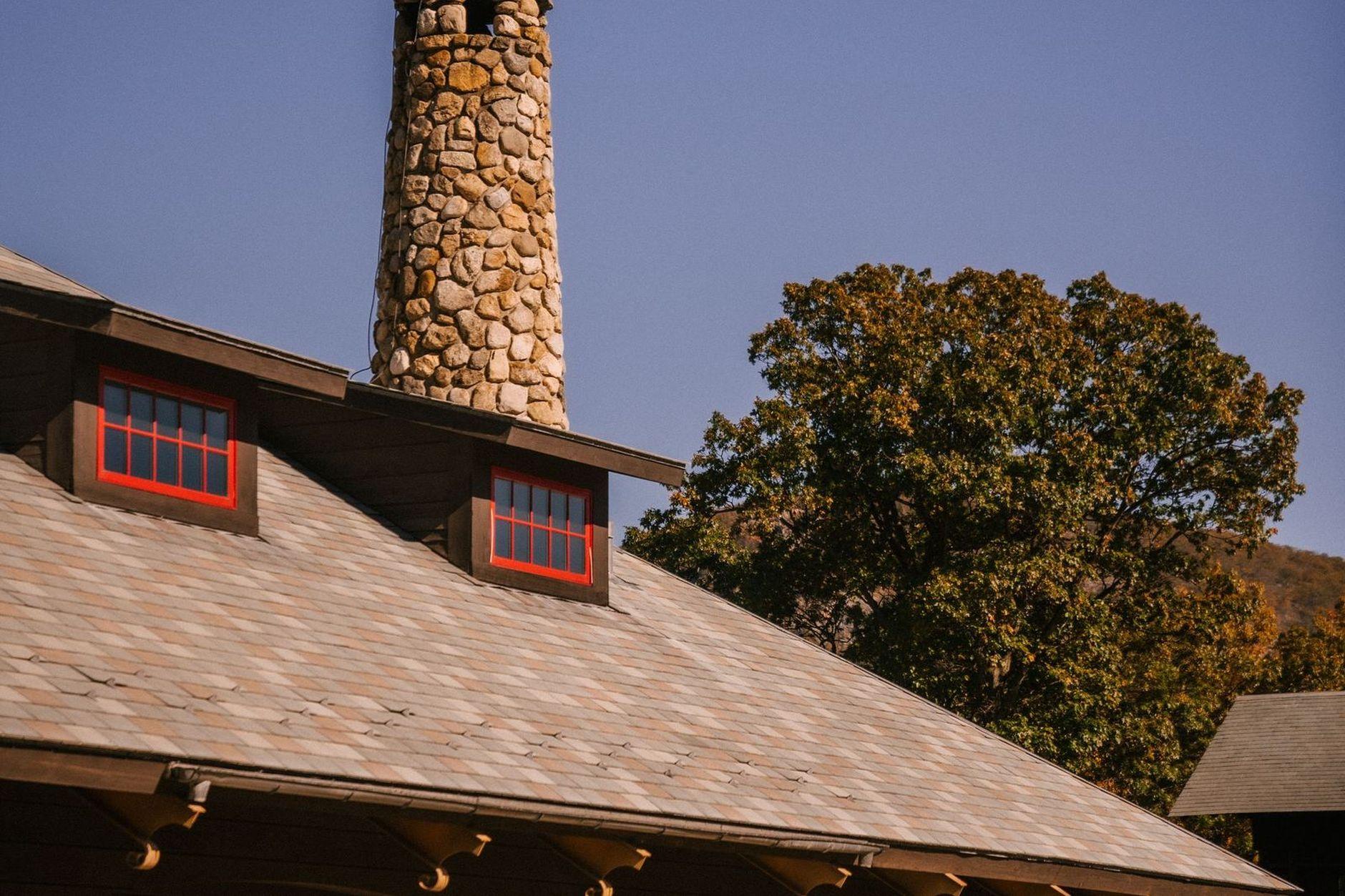
Flashing is the metal that seals the joint where the chimney passes through the roof. It is tucked into the brick joints and laid under the roof covering, so water runs over it instead of into the attic.
The liner is the inside wall of the flue. In older brick chimneys it is a stack of clay tiles. In newer ones, or ones that have been relined, it is a stainless steel pipe. The liner keeps heat and smoke inside the flue and away from the wood framing of the house.
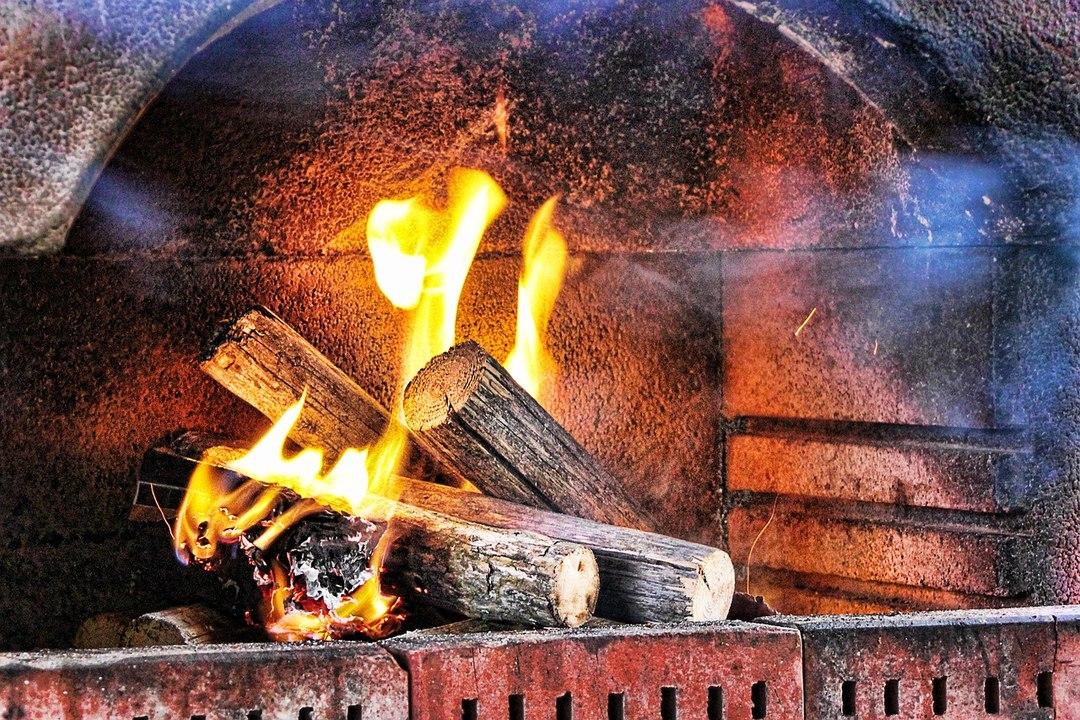
The damper is a movable lid on the flue: open while a fire burns, shut the rest of the time. The common older kind, a throat damper, is mounted low, right over the firebox. A top-sealing damper is fitted up at the chimney's mouth instead, and you work it with a cable that hangs down into the fireplace.
When water gets in
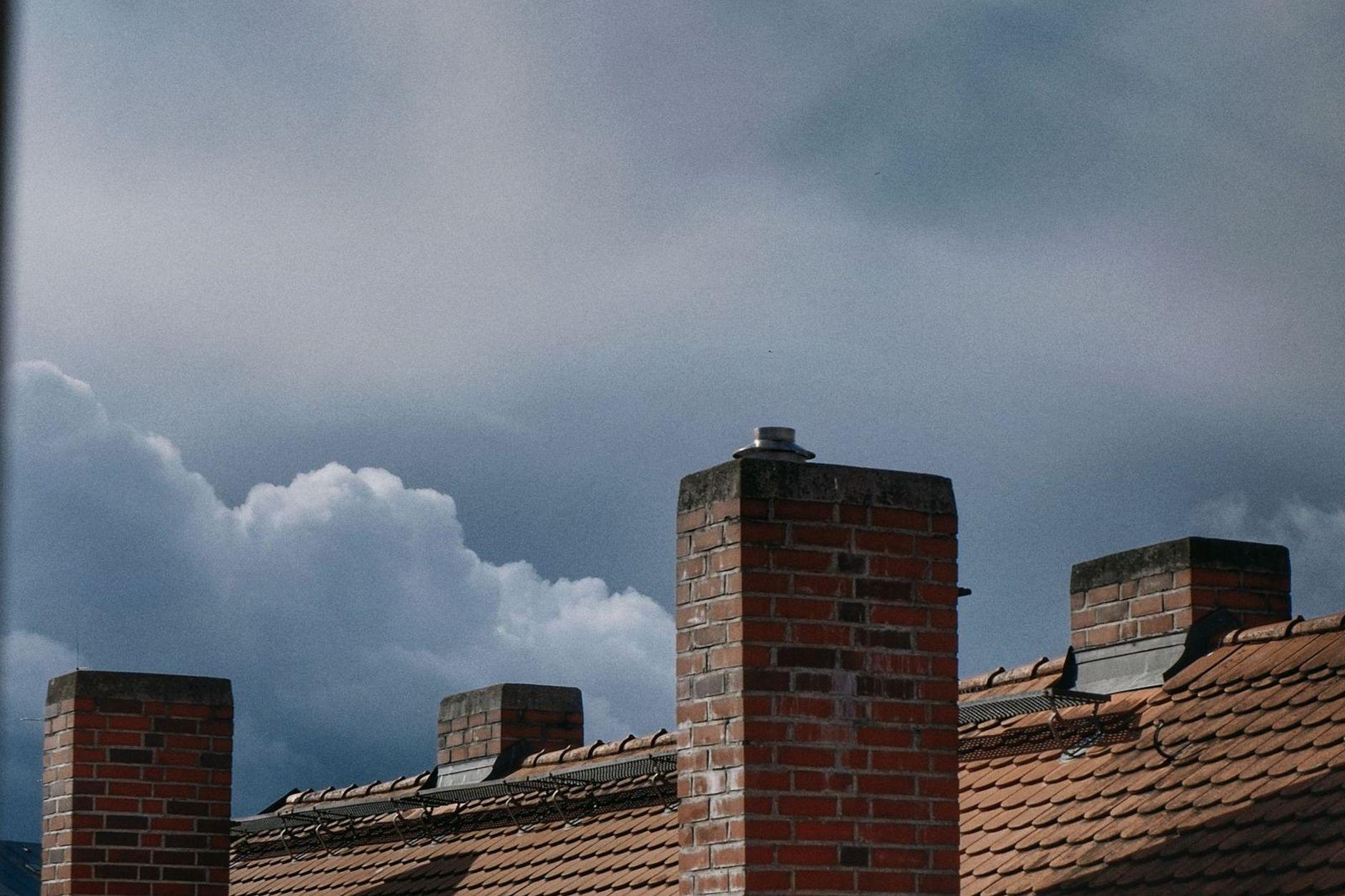
Water stains near a chimney almost always trace back to one of four places: the cap, the crown, the flashing or the brick itself. Brick soaks up water like a sponge if it has never been sealed or the seal has worn off. Winter storms in the San Gabriel Valley often bring rain hard enough to find any gap at all.
Finding the leak is the first half of the job. We look at the roof, the attic and the chimney, and trace the water back to where it enters. Then the fix goes where the leak is, not where the stain shows up. With us, tracing and repairing a chimney leak is $575 to $3,450, depending on what the cause turns out to be and how much of it needs replacing. If the chimney is wide and sits across the slope of the roof, a cricket may be part of the fix, at $460 to $1,035, or $690 to $1,700 together with new flashing. Sealing the brick against rain is part of our waterproofing work and is quoted once we have seen the chimney.
When the liner is cracked
A cracked liner is usually found on a camera inspection. It is rarely visible from below. Chimney fires, quakes and decades of heat crack clay tiles, and the gaps let smoke, heat and moisture into the brick and sometimes the house. A smoky smell in a room with no fire, or smoke coming back into the room when the damper is open, can both point here.
The fix is usually a new stainless liner run down inside the old flue and connected at the top and bottom. It is quoted in writing after the camera has shown the height, the shape of the flue and the extent of the damage, because those three things set the size of the job. A Level 2 inspection, which includes the camera scan, is $400. Our liner installation page explains the work.
When the damper sticks
Throat dampers rust in the damp and warp in the heat. A warped plate will not seal, so warm air leaves the house all winter and hot air comes in all summer. A rusted one can jam half open, or fall shut while a fire is lit.
There are two usual fixes. Replacing the plate and frame where it sits now, or fitting a top-sealing damper at the top of the chimney, which also acts as a cap. Which one fits depends on the size of the throat, its condition and whether the chimney has a cap already. Both are quoted in writing once we have seen the damper. Our damper repair page covers the options.
What decides the price and the next step
The sign you saw tells us where to look. What we find there decides the job. For a stain, it is where the water gets in and how much flashing or brick is affected. For a smoky room, it is what the camera shows inside the flue. For a damper, it is the type, size and state of the plate.
Tell us which of the three you noticed, when you first saw it, and attach a photo of the stain, the fireplace or the damper handle. Send those through the form, and we will reply with the visit that answers the question and a written quote for what it finds.
Quakes and older chimneys
Brick chimneys in this part of Los Angeles County have lived through the 1987 Whittier Narrows and 1991 Sierra Madre quakes. A shake can crack the liner, open the flashing joint and loosen the crown all at once, so one sign often comes with others. If the chimney is leaning, or bricks near the roof line are loose, our seismic retrofit service covers bracing, straps and rebuilding the top section to the roof line.
Dryer vents, a related job
New owners are sometimes surprised that we clean dryer vents too. A dryer vent is a duct carrying hot, damp air and lint out of the house, and when it clogs, drying takes longer and the lint is a fire risk. We can look at it on the same visit as the chimney. See dryer vent cleaning.
Related reading
For the parts at the very top of the chimney, see what sets the price of a crown, cap or chase cover. For buyers who found one of these issues during escrow, see buying a house with a fireplace. Our leak repair page and the up to code repairs page list the prices we publish.
Booking a repair visit
We repair chimneys across Arcadia, Sierra Madre, El Monte and San Gabriel. To get a crew booked, go to the contact page and tell us which of the three signs brought you here.
Want This Checked at Your House?
Thurston sweeps and inspects your fireplace, names each part as we go, and puts every finding on paper with a photo. We visit owners in Arcadia, Sierra Madre, El Monte, San Gabriel and nearby cities.